PRACTICAL GUIDE TO OPTIMIZING BLEACHING EARTH DOSAGE TO REDUCE COST PER TON IN PALM OIL REFINING
1. Structural Cost Dynamics in Physical Refining of Palm Oil
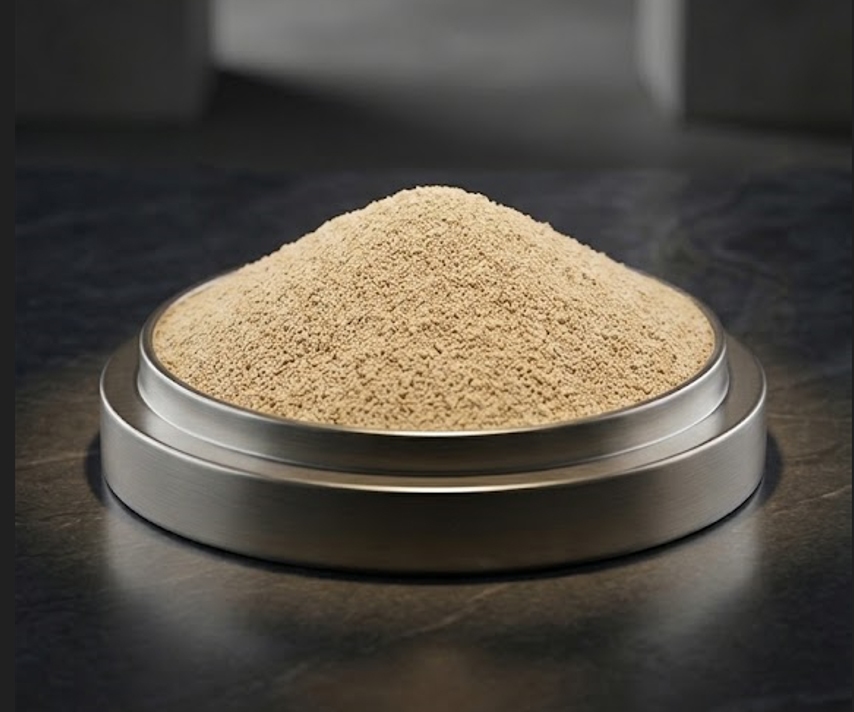
The physical refining process of Crude Palm Oil (CPO) is the standard industrial method chosen for its efficiency in maintaining neutral triglyceride levels compared to chemical refining, which utilizes alkaline saponification separation. The physical refining sequence is structured into three main stages: degumming, bleaching, and deodorization. Among the chemical processing aids injected into the refinery, Bleaching Earth (BE)—predominantly based on acid-activated or neutral bentonite/montmorillonite clay—stands out as the largest contributor to the operational expenditure (OPEX) of CPO processing. Optimizing BE dosage does not merely focus on the aesthetic target of oil clarity, but is a key strategy in determining the cost per ton of Refined Bleached Deodorized Palm Oil (RBDPO).
Inappropriate BE dosing triggers a dual financial penalty. On one side, excessive BE injection (over-dosing) directly escalates chemical procurement costs. On the other side, Spent Bleaching Earth (SBE) retains a high proportion of bound oil, typically ranging between 18% to 25% of the total weight of SBE. Consequently, every extra kilogram of BE introduced into the bleacher will absorb and discharge high-value neutral oil trapped within the filter cake during filtration.
Conversely, an insufficient dosage (under-dosing) impairs the system’s ability to bind impurities, secondary oxidation products, and pro-oxidant metals. This risks producing deodorized oil that fails color specifications (off-spec red color) or undergoes color reversion during storage. Off-spec oil requires energy-intensive and steam-consuming re-processing, dramatically spiking the total refining cost per ton.
2. Characterization of Raw CPO and Its Relationship with Bleaching Earth Dosage
The foundation of precise BE dosage optimization lies in the analytical characterization of incoming raw CPO feed. The most critical determinant for measuring the oil’s bleachability efficiency is the Deterioration of Bleachability Index (DOBI). DOBI is measured spectrophotometrically as the ratio of UV-Vis absorbance at wavelengths of 446 nm and 269 nm:
DOBI = A_446 / A_269
Absorbance at 446 nm represents the concentration of carotenoid pigments (α- and β-carotene) that give CPO its natural yellow-red color (natural levels average between 500 to 700 ppm). Absorbance at 269 nm measures the presence of secondary oxidation products, such as conjugated dienes, ketones, and aldehydes. A high DOBI value indicates that the palm fruits were harvested at optimal ripeness and have not undergone severe oxidative degradation. High-DOBI oil is easily bleached and therefore requires lower BE concentrations.
Table 1 outlines the CPO quality classification matrix based on DOBI values and recommended baseline Bleaching Earth dosages to maintain refinery stability:
| CPO Quality Category | DOBI Value | Absorbance A_269 | Free Fatty Acid (FFA) (%) | Recommended Base BE Dosage (% w/w) | Operational Risks & Impacts |
| High Grade | > 2.93 (up to > 3.24) | < 0.340 | ≤ 4.0% | 0.6% – 0.8% | Extremely easy bleaching; high risk of over-dosing if dosage is not proportionally reduced. |
| Medium Grade | 2.31 – 2.92 | 0.340 – 0.370 | 4.0% – 4.5% | 0.9% – 1.1% | Stable processing; standard bleaching performance for the refining industry. |
| Low Grade | 1.68 – 2.30 | > 0.370 | > 4.5% | 1.2% – 1.5% | High accumulation of oxidation products; requires extra adsorption capacity and strict color monitoring. |
| Very Poor / Waste | < 1.68 | High (> 0.450) | Flexible / High | > 1.5% (up to 2.5%) | High risk of color reversion in the deodorizer; blending is recommended prior to processing. |
In plant operations, blending low-grade CPO with high-grade CPO is frequently applied to increase the feed’s average DOBI value. However, bleaching kinetics analysis reveals that blending does not fully eliminate secondary oxidation molecules. Although the blend’s DOBI mathematically improves, oxidation molecules from the low-grade CPO fraction can still trigger additional free fatty acid (FFA) formation and disrupt refining stability. Therefore, real-time DOBI sample testing must serve as the primary reference for setting automatic BE weighing systems in plant control loops.
3. Key Operational Parameters in the Bleacher Unit
The adsorption performance of bleaching clay inside the bleacher vessel heavily relies on the interaction between clay physicochemical properties and thermodynamic process variable settings. Economical BE dosage adjustment can only be achieved if three key operational parameters—temperature, contact time, and vacuum pressure—are tightly controlled within their optimal limits.
Oil Temperature and Viscosity
Operating temperature in the bleacher is generally maintained between 85°C and 110°C (up to 125°C for specialized clay specifications). Elevating temperature significantly lowers CPO viscosity, which enhances BE particle dispersion and improves contact efficiency between the liquid oil phase and the solid clay surface. Lower viscosity reduces flow resistance, accelerating the absorption rate of chlorophyll and other color pigments. However, exceeding 120°C without a sufficient vacuum level accelerates thermal oxidation reactions, which degrades triglyceride structures and reduces the oxidative stability of the final deodorized oil.
Contact Time and Mechanical Agitation
Retention time of oil with BE slurry inside the bleacher is set between 30 and 40 minutes. Excessively short contact times (< 15 minutes) prevent the adsorption reaction from reaching isothermal equilibrium, requiring an increased BE dosage to compensate for low adsorption efficiency. Conversely, excessive contact times (> 45 – 60 minutes) at high temperatures trigger desorption, releasing bound impurities back into the oil phase, and accelerate thermal hydrolysis, increasing FFA levels. A combination of mechanical agitation and sparging steam injection is mandatory to keep BE particles uniformly suspended without settling at the bottom of the vessel.
Vessel Vacuum Conditioning
The bleaching process must occur under full vacuum, with pressures measured between 50 mmHg and 70 mmHg. Vacuum pressure evaporates residual moisture in the oil to 0.2% – 0.3% and prevents direct atmospheric oxygen contact with the hot oil, minimizing the formation of new peroxide compounds (Peroxide Value / PV) during adsorption.
Synergy of Acid Degumming
Prior to BE addition, CPO must undergo acid degumming by adding phosphoric acid (H₃PO₄) or citric acid at a dosage range of 0.02% – 0.06% wt% at 85°C – 90°C. The acid acts as a chelating agent to bind pro-oxidant heavy metal cations like iron (Fe) and copper (Cu), while coagulating non-hydratable phosphatides (NHP). If acid degumming is incomplete, NHP compounds and free metals coat the active pores of BE clay, drastically reducing its specific adsorption capacity for pigments and forcing operators to inefficiently increase BE dosages.
4. Thermal Bleaching Interactions and Food Contaminant Control
Understanding color removal requires a clear separation between physicochemical adsorption in the bleacher unit and thermal degradation in the deodorizer. A common strategic error in refineries is forcing the red color of Degummed Bleached Palm Oil (DBPO) to extremely low levels at the filtration unit outlet. In physical refining, thermal bleaching occurs dominantly in the deodorization column at high temperatures (240°C – 265°C) under high vacuum. β-carotene pigments are thermolabile and thermally degrade into colorless volatile structures during deodorization. Therefore, the target red color of DBPO exiting the bleacher only needs to be kept at a moderate level (e.g., adjusting CPO color from 20/20 down to 17/20, or a red color value around 2.4 – 2.6). Forcing a deeper red color reduction solely in the bleacher exponentially escalates BE consumption without adding any quality benefit to the final RBDPO.
Table 2 summarizes the behavior of impurities between the Bleacher and Deodorizer units:
| Impurity / Contaminant Parameter | Mechanism / Behavior in Bleacher (90–110°C) | Mechanism / Behavior in Deodorizer (240–265°C) |
| β-Carotene (Red Pigment) | Partial adsorption on the surface of BE pores. | Dominantly thermally degraded into colorless molecules. |
| Chlorophyll (Green Pigment) | Total adsorption by BE (Absolutely critical). | Heat-resistant; does not decompose and can trigger color reversion. |
| Heavy Metals (Fe, Cu) | Bound by acid degumming and adsorbed by BE. | Not distilled; remains in oil and destroys stability if not adsorbed. |
| Peroxide Value (PV) | Decomposed and adsorbed by active sites of BE. | Completely decomposed into volatile acid and aldehyde components. |
Nonetheless, the role of BE remains irreplaceable for removing thermostable impurities, particularly chlorophyll. Chlorophyll originating from raw/unripe palm fruits is often masked by high carotenoid levels. If chlorophyll is not fully adsorbed by BE in the bleacher, it will not degrade in the deodorizer, yielding an RBDPO with a dull greenish-grey tint and reduced oxidative stability.
Mitigation of 3-MCPD and Glycidyl Esters (GE) Contaminants
Optimizing BE use in modern edible oil supply chains must account for the risk of process contaminants, namely 3-monochloropropane-1,2-diol esters (3-MCPDE) and Glycidyl Esters (GE). Food safety agencies such as EFSA set a maximum limit of 2.5 ppm for 3-MCPD in refined palm oil. Using strongly acid-activated bleaching earth with high surface acidity acts as a catalyst for generating 3-MCPD and GE precursors when the oil undergoes extreme heating in the deodorizer. Conversely, using neutral bleaching earth or weakly acid-activated clay is proven effective in reducing 3-MCPD ester levels (reducing levels to 1.33 ppm compared to 1.99 ppm for strongly acid-activated clay). While neutral clay requires closer monitoring of its specific adsorption capacity, adjusting acid degumming to 0.06% H₃PO₄ combined with precise dosing successfully keeps GE below 0.50 mg/kg and 3-MCPD within strict regulatory limits.
5. Applied Optimization Methodology and Process Control Algorithms
Transitioning refinery operations from manual trial-and-error to data-driven, precision control relies on statistical mathematical modeling and optimization algorithms.
Response Surface Methodology (RSM)
Response Surface Methodology with a Central Composite Design (CCD) is used to map non-linear interactions between independent variables—BE dosage (X₁), bleaching temperature (X₂), and bleaching time (X₃)—against oil quality responses. The resulting quadratic polynomial equation is formulated as follows:
Y = β_0 + β_1*X_1 + β_2*X_2 + β_3*X_3 + β_11*X_1^2 + β_22*X_2^2 + β_33*X_3^2 + …
Using RSM regression analysis, plants can establish local optimum points where BE clay consumption is minimized without escalating PV (> 0.5 meq O₂/kg) or exceeding the GE threshold (< 0.50 mg/kg).
Genetic Algorithms (GA) for Refinery Control Systems
In large-scale continuous refineries, genetic algorithm (GA) integration is applied to automatically minimize costs through distributed process data:
Minimize: f(D_BE, D_acid) = (C_BE * D_BE) + (C_acid * D_acid)
Constraints: RBDPO Red Color ≤ 2.5, FFA ≤ 0.1%, PV ≤ 0.5 meq/kg
The GA optimization model confirms that adjusting standard dosages to 0.9% for BE and 0.03% for citric acid is adequate to maintain standard RBDPO quality while providing the highest process profitability for the refinery.
Empirical Evidence of Industrial-Scale Refining
At a refinery processing 2,000 tons/day with a feed flow rate of 83,300 kg/hr, operational linear regression analysis demonstrates that varying BE dosage from 0.6% to 1.4% directly impacts DBPO color stability. Empirical testing confirmed that setting the optimized dosage at 1.0% (down from a historical average of 1.2% – 1.3%) consistently maintains the DBPO target color at 17/20, saving dozens of tons of bleaching clay monthly without compromising final product specs.
6. Filtration Efficiency and Oil Retention Reduction in Spent Bleaching Earth
The bleaching process does not end in the bleacher vessel but extends to solid-liquid separation in the filtration unit, which typically uses Niagara Pressure Leaf Filters. After adsorption, the oil-clay slurry is pumped into the filters to separate spent clay from clear oil. A Niagara filter cycle runs through five sequential stages:
- 1. Pre-coating: Forming an initial clay layer on filter leaves to prevent filter medium blinding.
- 2. Filtration Run: Feeding the hot oil-clay slurry, retaining BE solids to build up filter cake thickness.
- 3. Oil Draining: Emptying residual free oil from the vessel once maximum cake thickness is reached.
- 4. Steam Blowing: Blowing high-pressure steam to dry the filter cake and purge bound oil from clay capillaries.
- 5. Cake Discharge: Opening the bottom discharge valve to drop the spent bleaching earth (SBE) cake.
Steam blowing plays the most critical role in minimizing cost-per-ton by recovering trapped neutral oil. Blowing steam at 120°C – 130°C and 3 – 4 bar for 15 to 20 minutes reduces the viscosity of oil trapped in cake capillaries, allowing it to be recovered. Without optimized steam blowing, oil retention in SBE can reach 25% – 30%. With precise steam control, oil retention is restricted to 18% – 20%. Additionally, Particle Size Distribution (PSD) must be balanced; excessive fines increase adsorption surface area but cause filter cake blinding, reducing permeability and steam drying efficiency.
7. Mathematical Model of Cost per Ton and Economic Scenario Analysis
To calculate the total financial impact, the mathematical model of oil refining cost per ton integrates direct chemical purchasing costs with the value of oil lost in SBE:
C_total = (D_BE * P_BE) + (D_BE * R_SBE * P_RBDPO) + (D_acid * P_acid)
Where model variables are defined as follows:
• C_total = Total variable cost of bleaching and degumming per ton of processed CPO (USD/ton)
• D_BE = Bleaching Earth dosage injected (kg/ton CPO)
• P_BE = Market price of Bleaching Earth (USD/kg)
• R_SBE = Oil retention ratio in Spent Bleaching Earth (kg oil / kg SBE)
• P_RBDPO = Market value of lost RBDPO oil (USD/kg)
• D_acid = Degumming acid dosage (H₃PO₄) (kg/ton CPO)
• P_acid = Market price of degumming acid (USD/kg)
Economic Simulation Assumptions:
• Bleaching Earth Price (P_BE): USD 350 / ton (USD 0.35 / kg)
• RBDPO Market Value (P_RBDPO): USD 900 / ton (USD 0.90 / kg)
• Phosphoric Acid Price (P_acid): USD 1,200 / ton (USD 1.20 / kg), with constant dosage at 0.05% (0.5 kg/ton CPO)
• SBE Oil Retention Ratio (R_SBE): Constant at 20% (0.20 kg oil / kg SBE)
Table 3 presents the economic simulation across three refinery operating scenarios:
| Refinery Scenario | BE Dosage (D_BE) | Direct BE Cost / Ton CPO | Oil Lost / Ton CPO | Oil Loss Cost / Ton CPO | Acid Cost / Ton CPO | Total Var Cost / Ton | OPEX per 100k Tons CPO |
| Scenario A: Over-dosing | 1.5% (15 kg/t) | 15 × 0.35 = $5.25 | 15 × 0.20 = 3.0 kg | 3.0 × 0.90 = $2.70 | 0.5 × 1.20 = $0.60 | USD 8.55 | USD 855,000 |
| Scenario B: Baseline | 1.1% (11 kg/t) | 11 × 0.35 = $3.85 | 11 × 0.20 = 2.2 kg | 2.2 × 0.90 = $1.98 | 0.5 × 1.20 = $0.60 | USD 6.43 | USD 643,000 |
| Scenario C: Precision | 0.8% (8 kg/t) | 8 × 0.35 = $2.80 | 8 × 0.20 = 1.6 kg | 1.6 × 0.90 = $1.44 | 0.5 × 1.20 = $0.60 | USD 4.84 | USD 484,000 |
Based on the scenario analysis, reducing BE dosage from Scenario A (1.5%) to Scenario C (0.8%) generates a net cost saving of USD 3.71 per ton of processed CPO. For a medium-sized refinery processing 100,000 tons of CPO annually, implementing precision optimization directly cuts OPEX by USD 371,000 per year. These savings stem from reduced direct chemical expenditures (USD 2.45/ton) and minimized neutral oil loss in SBE (USD 1.26/ton).
8. Operational Recommendations and Industrial Implementation Strategy
To implement sustainable cost-per-ton reduction programs in palm oil refineries, engineering management and process operators are advised to deploy the following practical steps:
- Implement DOBI-Based Automatic Dosage Regulation: Mandate testing of DOBI, A₂₆₉ absorbance, and chlorophyll for every incoming CPO batch. Logistical flow controls must automate BE weighing via PLC according to feed quality, instantly reducing clay injection for High-Grade CPO.
- Target Intermediate Red Color in DBPO: Instruct operators not to over-bleach DBPO in the filtration stage. Keep intermediate targets (17/20, Red Color 2.4 – 2.6) and let thermal bleaching in the deodorizer (240°C – 250°C) complete the β-carotene decomposition.
- Lock Bleacher Operating Parameters: Keep bleacher temperature at 90°C – 105°C, retention times at 30 – 40 minutes, and vacuum at 50 – 70 mmHg. This guarantees peak adsorption kinetics without triggering thermal oil oxidation.
- Standardize Niagara Filter Steam Blowing SOPs: Enforce a minimum 15-minute steam blowing duration at 3.5 bar and 125°C. This ensures SBE oil retention remains strictly below 20%.
- Mitigate 3-MCPD and GE Contaminants: For strict export markets, transition to neutral or weakly-activated BE, combined with 0.05% – 0.06% phosphoric acid during degumming. This restricts 3-MCPD formation below 2.5 ppm while maintaining economic clay consumption.
References
Development of Optimisation Model based on Genetic Algorithms for Palm Oil Refining Industry – Aidic, https://www.aidic.it/cet/17/56/125.pdf
OPTIMISATION OF PALM OIL DEGUMMING PROCESS TOWARDS REFINED BLEACHED DEODORISED PALM OIL SAFETY AND QUALITY MOHAMMAD SAIFUL NIDZA – EPrints USM, http://eprints.usm.my/59231/1/24%20Pages%20from%20MOHAMMAD%20SAIFUL%20NIDZA%20M%20BIN%20ISMAIL%20-%20TESIS.pdf
Influence of the Degumming Process Parameters on the Formation of Glyceryl Esters and 3-MCPDE in Refined Palm Oil – PMC, https://pmc.ncbi.nlm.nih.gov/articles/PMC8750379/
Optimization of palm oil refining process for reduction of 3- monochloropropane-1,2-diol ester to obtain low MCPD palm, https://www.cabidigitallibrary.org/doi/pdf/10.5555/20193025069
Ecological-safe and low-cost activated-bleaching earth – Widya Mandala Surabaya Catholic University Repository, https://repositori.ukwms.ac.id/id/eprint/31320/2/22-Ecological_safe_and_low-cost_.pdf
optimalisasi dosing bleaching earth pada proses refinery untuk minimalisir over dosing dan under dosing di – Universitas Mercu Buana, https://repository.mercubuana.ac.id/96285/1/01%20COVER.pdf